Elegir un remolque para contenedores inadecuado puede retrasar tu entrega, aumentar el riesgo de daños y elevar los costos de transporte. Si tu remolque no se adapta al tamaño del contenedor, al peso de la carga, a las normas de tránsito o al método de carga, todo el trabajo se vuelve más difícil. El remolque adecuado hace que el transporte de contenedores sea más seguro y rápido.
Los principales tipos de remolques para contenedores incluyen los remolques con chasis para contenedores, los remolques esqueléticos, los remolques de plataforma para contenedores, los remolques de cuello de cisne, los remolques basculantes o de volteo, los remolques extensibles y los remolques especializados para el transporte de contenedores refrigerados. Cada tipo de remolque es compatible con diferentes longitudes de contenedores, pesos de carga, métodos de carga y necesidades de envío.
Esquema del artículo
- ¿Qué es un remolque portacontenedores?
- ¿Por qué es importante el tipo de remolque portacontainers para el transporte?
- ¿Cuáles son los tipos más comunes de remolques para contenedores?
- ¿Qué es un remolque con chasis para contenedores?
- ¿Cuándo se debe usar un remolque contenedor de plataforma plana?
- ¿Qué son los remolques de cuello de cisne para el transporte de contenedores?
- ¿Cómo funcionan los remolques basculantes?
- ¿Cómo influyen la longitud del remolque y el tamaño del contenedor en tu elección?
- ¿Cómo contribuyen los remolques de contenedores refrigerados a la cadena de frío de la carga?
- ¿Cómo eliges el remolque adecuado para tu contenedor?
- ¿Qué deben revisar los compradores B2B antes de hacer un pedido?
- Preguntas frecuentes sobre los remolques para contenedores
- Puntos clave
¿Qué es un remolque portacontenedores?
A remolque portacontenedores es un remolque de carretera diseñado para el transporte de contenedores de carga. Se acopla a un camión tractor y transporta el contenedor desde un puerto, una terminal ferroviaria, un almacén, una fábrica o una obra hasta el punto de entrega final.
En pocas palabras, el remolque sostiene el contenedor mientras el camión lo transporta. El contenedor puede transportar mercancías generales, maquinaria, materiales de construcción, productos a granel o carga sensible a la temperatura. Los remolques para contenedores se utilizan ampliamente para transportar mercancías en la logística de contenedores, las operaciones portuarias, el transporte intermodal y el transporte terrestre de larga distancia.
En los distintos mercados se utilizan diferentes nombres. Algunos compradores lo llaman chasis para contenedores, otros lo llaman remolque con chasis y otros lo llaman un remolque para contenedores de carga. El diseño exacto depende del tamaño del contenedor, la longitud del remolque, la configuración de los ejes, las condiciones de la carretera y las normas locales de transporte.

¿Qué es un remolque portacontenedores?
¿Por qué son importantes los tipos de remolques para contenedores en el transporte?
Hay distintos tipos de remolques para contenedores porque no todos los trabajos con contenedores son iguales. Un trabajo corto en un puerto local es diferente a una ruta larga por carretera. Un contenedor ligero de 20 pies es diferente a un contenedor pesado de 40 pies. Un contenedor seco sellado es diferente a un contenedor refrigerado que debe mantener los productos a temperatura adecuada durante el viaje.
Elegir el remolque adecuado te ayuda a mejorar la seguridad, reducir el tiempo de carga y descarga, y proteger la carga. También ayuda a los propietarios de flotas a cumplir con el límite legal de altura, las normas de carga por eje y las normas de peso en puentes en su mercado objetivo. Estos detalles son muy importantes en el transporte real.
Para las empresas de logística, los distribuidores de remolques, los operadores portuarios y los compradores de proyectos, contar con el remolque adecuado puede facilitar el trabajo diario. También puede reducir los costos de reparación y prolongar la vida útil del remolque. Por eso, la elección de un buen remolque debe partir del contenedor, no de la lista de precios.
¿Cuáles son los tipos más comunes de remolques portacontenedores?
Entre los tipos más comunes de remolques para contenedores se encuentran los remolques con chasis para contenedores, los remolques esqueléticos, los remolques de plataforma plana para contenedores, los remolques de cuello de cisne, los remolques basculantes, los remolques de descarga, los remolques extensibles y los remolques refrigerados para el transporte de contenedores. Cada tipo de remolque resuelve un problema de transporte diferente.
Aquí tienes una comparación rápida:
| Tipo de remolque |
Uso principal |
Ideal para |
| Remolque con chasis para contenedores |
Transporte de contenedores estándar |
Puertos, terminales logísticas, rutas intermodales |
| Avance de «Skeletal» |
Movimiento de contenedores ligeros |
Operaciones regulares de contenedores |
| Remolque portacontenedores de plataforma plana |
Contenedores y carga mixta |
Transporte flexible de carga |
| Remolque de cuello de ganso |
Altura total menor |
Contenedores de gran capacidad y control de la altura en el transporte por carretera |
| Remolque basculante |
Carga de contenedores a nivel del suelo |
Sitios sin grúas |
| Remolque basculante |
Descarga de contenedores a granel |
Cereales, arena, minerales, chatarra |
| Remolque extensible |
Varias longitudes de contenedores |
Flotas que manejan distintos tamaños |
| Configuración de un remolque contenedor refrigerado |
Movimiento de contenedores en la cadena de frío |
Alimentos, medicamentos, productos congelados |
Estos tipos de remolques facilitan el transporte de una amplia variedad de contenedores y carga. Algunos son sencillos y ligeros. Otros son más resistentes y especializados. La mejor opción depende de la ruta de transporte de los contenedores, el peso de la carga, las condiciones de la carretera y el lugar de carga.
¿Qué es un remolque con chasis para contenedores?
A chasis para contenedores El remolque para contenedores es uno de los tipos más comunes de remolques para el transporte de contenedores. Cuenta con un chasis resistente con cierres de torusión para sujetar un contenedor de carga de manera segura. Por lo general, es más ligero que un remolque de plataforma completa, ya que no necesita una plataforma completa.
Un chasis para contenedores se utiliza principalmente en puertos, patios ferroviarios, autopistas y rutas de logística de contenedores. Es un remolque práctico para el traslado de contenedores, ya que los mantiene fijos en su lugar y tiene una estructura sencilla. Muchas flotas eligen este tipo de chasis porque ofrece una buena eficiencia para el trabajo repetitivo con contenedores.
Un modelo de chasis puede diseñarse para el uso de contenedores de 20 pies, 40 pies, 45 pies o de varios tamaños. Algunos diseños admiten contenedores de distintos tamaños gracias a posiciones de bloqueo ajustables. Esto hace que el uso de remolques con chasis para contenedores sea una buena opción para las empresas que transportan contenedores de diferentes longitudes todos los días.
¿Cuándo se debe usar un remolque contenedor de plataforma plana?
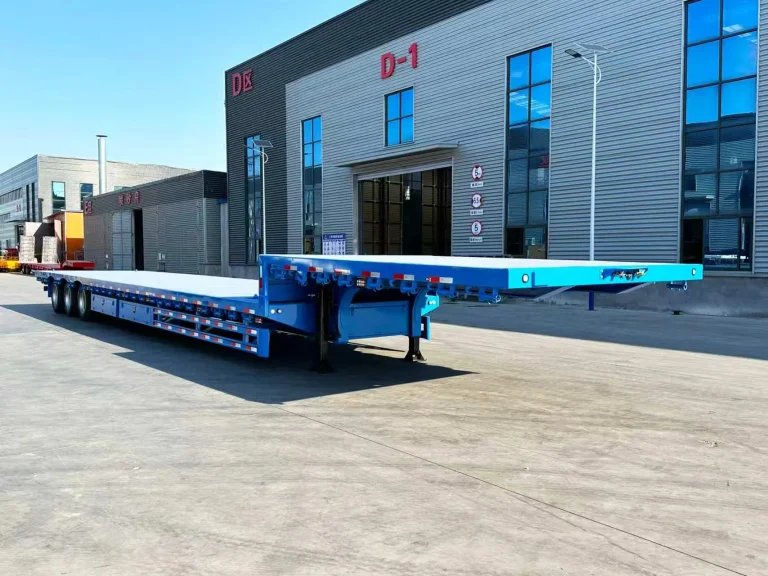
Un remolque de plataforma para contenedores resulta útil cuando se necesita un remolque que pueda transportar tanto contenedores como otra carga. Cuenta con una plataforma completamente plana, por lo que puede transportar un contenedor de carga, materiales de acero, maquinaria, tuberías, paletas o materiales de construcción. Esto brinda mayor flexibilidad a los propietarios de flotas.
Los remolques de plataforma para contenedores se utilizan con frecuencia para transportar carga en contenedores cuando la misma flota también maneja carga a granel o carga de proyectos. Un remolque de plataforma puede equiparse con cierres giratorios para asegurar los contenedores. Cuando no se utilizan los cierres, el mismo remolque puede transportar otras mercancías en la plataforma.
Este tipo de remolque resulta ideal cuando tu empresa no se dedica exclusivamente al transporte de contenedores. Por ejemplo, una empresa de logística puede transportar un contenedor sellado el lunes, piezas de acero para remolques el martes y materiales pesados de construcción el miércoles. Ese es el valor de contar con tipos de remolques flexibles.

¿Cuándo se debe usar un remolque contenedor de plataforma plana?
¿Qué son los remolques de cuello de cisne para el transporte de contenedores?
Los remolques de cuello de cisne cuentan con una estructura delantera especial rebajada. El diseño de cuello de cisne ayuda a reducir la altura total de transporte del contenedor. Esto resulta útil cuando un contenedor de gran capacidad debe respetar el límite legal de altura en las carreteras.
Los remolques de cuello de cisne suelen utilizarse con contenedores de 40 o 45 pies. La parte delantera del contenedor queda más baja en el remolque, lo que ayuda a reducir la altura total. Para los compradores que operan en mercados con normas estrictas de altura, este diseño puede ser muy importante.
En comparación con el estándar remolques con chasis, los remolques de cuello de cisne son más especializados. Son una buena opción cuando la altura permitida por la ley, los puentes, los túneles y la seguridad en la ruta son factores importantes a considerar. Si transportas contenedores altos con frecuencia, un remolque de cuello de cisne podría ser la opción adecuada para tu contenedor.
¿Cómo funcionan los remolques basculantes?
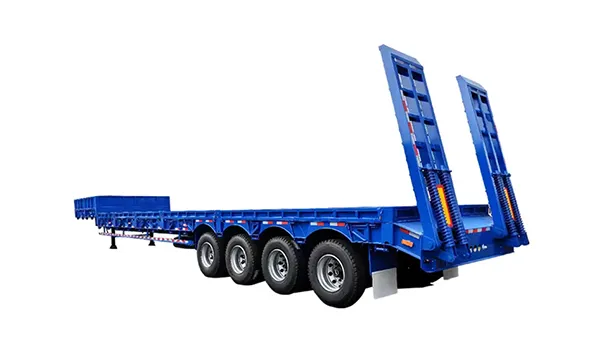
Un remolque basculante facilita la carga y descarga de un contenedor cuando no se cuenta con una grúa ni con un manipulador de contenedores. La plataforma del remolque se inclina hacia abajo para que el contenedor pueda deslizarse o ser arrastrado hasta el remolque. Esto puede resultar útil en lugares remotos, granjas, zonas de construcción o patios pequeños.
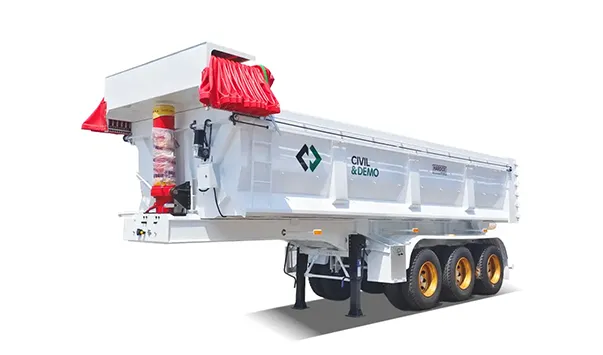
Un remolque basculante es diferente. Se utiliza cuando es necesario descargar material a granel del contenedor mediante la inclinación del remolque. Por ejemplo, se pueden descargar granos, arena, minerales, carbón, chatarra u otra carga suelta al elevar la carrocería del remolque. Por eso, los sistemas de inclinación y basculación de contenedores se utilizan con frecuencia en industrias especializadas.
Los remolques basculantes no siempre son necesarios para el transporte portuario habitual. Sin embargo, en obras de proyectos, zonas mineras y operaciones de carga a granel, pueden ahorrar costos de mano de obra y de equipo. Además, reducen la dependencia de grúas grandes durante la carga y descarga.
¿Cómo influyen la longitud del remolque y el tamaño del contenedor en tu elección?
El tamaño del contenedor es uno de los primeros aspectos que hay que verificar antes de comprar un remolque para contenedores. Las longitudes más comunes de los contenedores son de 20 pies, 40 pies y 45 pies. En algunas regiones también se utilizan otros tamaños, por lo que siempre hay que confirmar la longitud y el peso del contenedor antes de la producción.
La longitud del remolque debe ajustarse al contenedor y a las normas de tránsito. Es posible que un contenedor de 40 pies requiera una configuración de chasis diferente a la de un contenedor de 20 pies. Algunos remolques pueden transportar un contenedor de 40 pies, dos contenedores de 20 pies o un contenedor de 45 pies, dependiendo de la posición de los cierres y del diseño del bastidor.
Aquí tienes una guía sencilla:
| Tamaño del contenedor |
Opciones comunes de remolques |
Notas |
| Contenedor de 20 pies |
Remolque con chasis corto o chasis multiposición |
Ideal para cargas compactas más pesadas |
| Contenedor de 40 pies |
Chasis de 40 pies o chasis con cuello de cisne |
Común en el transporte portuario y por carretera |
| Contenedor de 45 pies |
Modelo con chasis extendido |
Se requiere la longitud correcta del remolque y la posición correcta del cierre |
| Tamaños mixtos de contenedores |
Chasis de contenedor extensible o con cierres múltiples |
Ideal para un uso flexible de la flota |
La longitud de los contenedores, los distintos requisitos de peso y las normas viales locales influyen en el diseño final del remolque. Por eso, los compradores deben revisar las especificaciones y confirmar el plano del remolque antes de realizar el pedido.
¿Cómo contribuyen los remolques de contenedores refrigerados a la cadena de frío de la carga?
Un contenedor refrigerado se utiliza para la carga que requiere control de temperatura. Esto incluye alimentos congelados, fruta fresca, medicamentos, mariscos, carne, productos lácteos y otros productos de la cadena de frío. Es posible que el remolque en sí no enfríe la carga, pero debe transportar el contenedor refrigerado de manera segura y proporcionar la energía necesaria o el generador cuando sea necesario.
Algunos compradores utilizan remolques refrigerados para el transporte local de carga con control de temperatura. Otros utilizan un remolque con chasis para contenedores para transportar un contenedor refrigerado del puerto al almacén. En ambos casos, el remolque debe ser resistente, estable y adecuado para el peso del contenedor.
El transporte en cadena de frío requiere una planificación minuciosa. El contenedor, el remolque, el sistema de alimentación eléctrica, el tiempo de recorrido y el punto de descarga deben funcionar en conjunto. Si alguna de estas partes falla, la carga puede perder valor rápidamente. Por esta razón, muchos compradores B2B solicitan un diseño de chasis reforzado, una configuración de ejes confiable y cierres giratorios resistentes.
¿Cómo elegir el remolque adecuado para tu contenedor?
Para elegir el remolque adecuado, empieza por tu trabajo real. No empieces por el modelo más barato. Aprende a elegir según el tamaño del contenedor, el peso del contenedor, la longitud de la ruta, las condiciones de la carretera, el método de carga y las regulaciones locales.
Hazte estas preguntas antes de elegir:
- ¿Qué tipo de contenedor transportas con más frecuencia?
- ¿Transportan contenedores de 20 pies, 40 pies, 45 pies o de distintos tamaños?
- ¿La carga es seca, a granel, pesada o con control de temperatura?
- ¿Necesitas un chasis, una plataforma, un remolque de cuello de cisne, uno basculante o uno extensible?
- ¿Funcionará el remolque en puertos, autopistas, minas, granjas o obras de construcción?
- ¿Qué capacidad de eje y qué tipo de suspensión necesitas?
- ¿Necesitas personalización OEM/ODM?
El chasis de un camión capaz de transportar cargas pesadas de contenedores debe adaptarse al plan de transporte en su totalidad. El tractor, la configuración de los ejes, la suspensión, los frenos, las llantas y el bastidor deben funcionar en conjunto. Un buen remolque para el transporte de contenedores no solo debe ser resistente; también debe adaptarse a tu negocio.
¿Qué deben verificar los compradores B2B antes de ordenar un remolque para contenedores?
Antes de comprar un remolque portacontenedores, los compradores deben revisar la estructura, el material, las soldaduras, la marca de los ejes, la suspensión, los cierres giratorios, el tren de aterrizaje, la calidad de la pintura y los documentos de exportación. Estos detalles influyen en la seguridad, la vida útil y el costo de mantenimiento a largo plazo.
Aquí tienes una lista de verificación útil para compradores:
| Verificar elemento |
Por qué es importante |
| Diseño de vigas principales |
Soporta el peso del contenedor durante el transporte |
| Posición de bloqueo giratorio |
Se adapta a contenedores de diferentes tamaños |
| Configuración de los ejes |
Cumple con las normas de carga y de tránsito |
| Sistema de suspensión |
Mejora la estabilidad y la durabilidad |
| Sistema de frenos |
Facilita el transporte seguro |
| Calidad de la soldadura |
Reduce el riesgo de agrietamiento |
| Proceso de pintura y protección contra la oxidación |
Ayuda a proteger el remolque tanto en el puerto como durante su uso en carretera |
| Confirmación del sorteo |
Evita errores de tamaño y diseño |
| Apoyo a la exportación |
Facilita la entrega a los compradores internacionales |
Como fabricante profesional de semirremolques en China, diseñamos y exportamos remolques para contenedores destinados a flotas logísticas, distribuidores de remolques, empresas de transporte portuario, contratistas de la construcción y compradores de proyectos internacionales. Ofrecemos servicios de personalización OEM/ODM adaptados a diferentes modos de transporte, normas de tránsito, tipos de carga y necesidades del mercado.
Nuestro objetivo es sencillo: ayudar a los compradores a conseguir un remolque que funcione en condiciones reales de trabajo. No solo una foto bonita. No solo un precio bajo. Un remolque resistente, práctico y confiable.
Estudio de caso: Selección de remolques portacontenedores para una flota de logística portuaria
Un cliente del sector de la logística portuaria necesitaba remolques para el traslado diario de contenedores entre el puerto, el almacén y el centro de distribución en el interior. Al principio, el comprador solo quería un remolque con chasis básico. Tras analizar su trabajo, descubrimos que manejaban diferentes tipos de carga y contenedores de varias longitudes.
Sugerimos un plan de remolques mixtos:
- Chasis con sistema de cierre múltiple para contenedores de 20 y 40 pies
- Remolques de cuello de ganso para rutas de contenedores de gran capacidad
- Remolques portacontenedores de plataforma plana para carga en contenedores y fuera de contenedores
- Diseño de chasis reforzado para carga pesada
- Cierres giratorios resistentes y una configuración de ejes confiable
Esto ayudó al comprador a optimizar el uso de los remolques en más rutas. La flota pudo transportar contenedores, manejar carga general y reducir el número de remolques inactivos. El comprador también obtuvo una mayor flexibilidad para sus futuras necesidades de transporte.
“El remolque para contenedores adecuado debe adaptarse al trabajo, a la ruta y al contenedor. Un buen remolque ahorra tiempo todos los días laborables.”

Cómo elegir remolques portacontenedores para una flota de logística portuaria
¿Por qué trabajar con un fabricante profesional de remolques para contenedores en China?
Un fabricante profesional puede ayudarte a diseñar el remolque que mejor se adapte a tu mercado, en lugar de obligarte a aceptar un modelo fijo. Esto es importante porque las normas de transporte de contenedores, las condiciones de las carreteras y los hábitos de carga varían según el país.
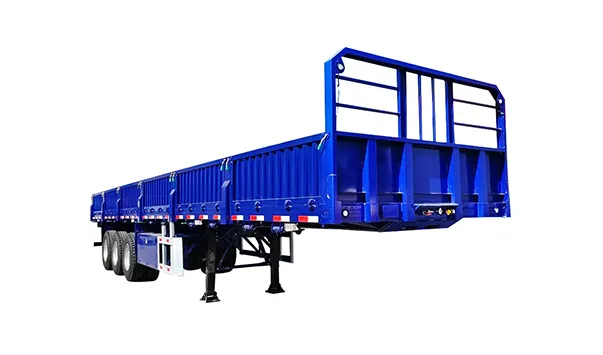
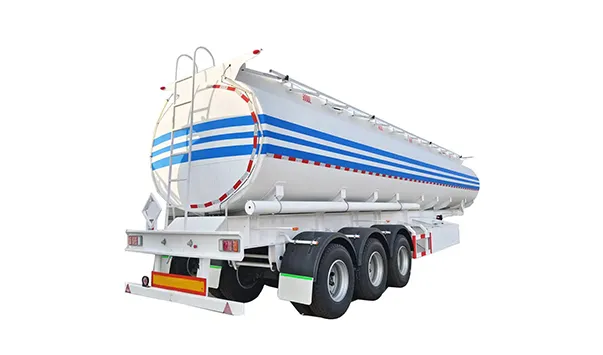
Fabricamos semirremolques de alta resistencia para compradores B2B de todo el mundo, incluyendo chasis para contenedores, semirremolques de plataforma plana, semirremolques con paredes laterales, semirremolques de plataforma baja, semirremolques con cuello de cisne desmontable, semirremolques cisterna para combustible, semirremolques volquetes, semirremolques para transporte de automóviles, camiones y repuestos para semirremolques. También ofrecemos servicios de personalización de semirremolques para logística de contenedores, transporte de carga a granel, maquinaria de construcción, operaciones mineras, logística portuaria y proyectos industriales.
Para los compradores, la colaboración directa con el fabricante puede ofrecer claras ventajas:
- Diseño de remolques a la medida según el tamaño del contenedor y el peso de la carga
- Gran capacidad de carga para trabajos pesados diarios
- Soldadura confiable y control de calidad durante la producción
- Opciones flexibles de eje, suspensión y posición de bloqueo
- Precios competitivos gracias a la fabricación directa
- Entrega constante para pedidos de concesionarios y flotas
- Apoyo técnico antes de la producción
- Cooperación a largo plazo para piezas de repuesto y pedidos recurrentes
Si su empresa necesita transportar un contenedor sellado, un contenedor a granel, un contenedor refrigerado o carga mixta, podemos ayudarle a elegir y personalizar la solución de remolque más adecuada.
Preguntas frecuentes sobre los tipos de remolques para contenedores
¿Para qué se utiliza un remolque portacontenedores?
Un remolque portacontenedores se utiliza para transportar contenedores por carretera. Transporta contenedores entre puertos, terminales ferroviarias, almacenes, fábricas y sitios de trabajo. Se utiliza ampliamente en logística, transporte intermodal y distribución internacional de carga.
¿Cuál es la diferencia entre un chasis para contenedores y un remolque de plataforma?
Un chasis para contenedores está diseñado principalmente para el transporte de contenedores y utiliza cierres giratorios para sujetarlos. Un remolque de plataforma cuenta con una plataforma completa y puede transportar contenedores, además de otra carga, como acero, maquinaria, paletas y materiales de construcción.
¿Cuál es el mejor remolque para un contenedor de 40 pies?
Un contenedor de 40 pies suele transportarse en un remolque con chasis de 40 pies o en un remolque con chasis de cuello de cisne. La mejor opción depende del peso de la carga, las normas de altura en las carreteras, los límites de carga por eje y de si el contenedor es estándar o de gran capacidad.
¿Un remolque puede transportar contenedores de distintos tamaños?
Sí. Algunos remolques con chasis para contenedores pueden transportar contenedores de distintos tamaños con diferentes posiciones de cierre giratorio. Los remolques extensibles también pueden transportar contenedores de distintos tamaños, dependiendo del diseño y de las normas locales.
¿Qué es un remolque de contenedores con cuello de cisne?
Un remolque para contenedores con cuello de cisne cuenta con un diseño frontal rebajado que ayuda a reducir la altura total de transporte. Se utiliza con frecuencia para contenedores de gran capacidad o en rutas con límites estrictos de altura en puentes y túneles.
¿Cómo elijo el remolque adecuado para el transporte de contenedores?
Comience por considerar el tamaño del contenedor, el peso de la carga, las condiciones de la ruta, el método de carga y las leyes locales. Luego, elija el tipo de remolque, la configuración de los ejes, la suspensión, la posición del cierre y la resistencia del chasis que mejor se adapten a su trabajo diario.
Aspectos clave que hay que recordar
- Un remolque portacontenedores se utiliza para transportar contenedores por carretera.
- Entre los principales tipos de remolques se encuentran los remolques con chasis, los remolques de plataforma para contenedores, los remolques de cuello de cisne, los remolques basculantes, los remolques volcadores, los remolques extensibles y los remolques especializados.
- Un chasis para contenedores es la opción más común para el transporte portuario e intermodal de contenedores.
- Un remolque de plataforma para contenedores ofrece mayor flexibilidad, ya que puede transportar tanto contenedores como carga general.
- Los remolques de cuello de ganso ayudan a mantener la altura permitida al transportar contenedores de gran capacidad.
- Los remolques basculantes y de inclinación son útiles para necesidades especiales de carga, descarga o descarga a granel.
- El tamaño del contenedor, la longitud del remolque, la configuración de los ejes, las normas de tránsito y el peso de la carga son factores que influyen en la elección del remolque.
- Los compradores B2B deben verificar la calidad de la soldadura, el diseño de la viga principal, los cierres giratorios, la suspensión, los frenos, la pintura y el apoyo para la exportación.
- Trabajar con un fabricante profesional de semirremolques en China te permite obtener precios directos de fábrica, diseños OEM/ODM, entregas confiables y apoyo a largo plazo.



 17 de junio de 2026