A trailer that looks fine from a distance can still hide frame fatigue, rust, brake wear, and rising repair bills. Ignore that too long, and downtime eats profit. The smart move is to understand what controls trailer lifespan and manage the unit before it becomes a money pit.
As a practical ballpark, a quality remolque de plataforma often lasts about 15 to 20 years or more with good care, while broader industry ranges for different open and commercial trailer types often land somewhere between 10 to 15 years and 10 to 20 years, depending on load, environment, and maintenance discipline. There is no single rule, because the true lifespan of a trailer depends on build quality, usage, corrosion exposure, and how well you inspect and service it.

As a China-based semi trailer manufacturer, we work with fleet owners, logistics operators, heavy equipment movers, mining contractors, and semi trailer distributors who care about one thing above all: total working life. In our experience, the question is not only “How long will this trailer last?” The better question is “How do I make sure this trailer keeps hauling safely, profitably, and with less time in the shop?”
Resumen
What is the average lifespan of a flatbed trailer?
Why do some trailers last much longer than others?
How do trailer type and hauling needs change trailer lifespan?
What parts usually wear out first on a working trailer?
How do rust, corrosion, and structural damage shorten trailer life?
Why is regular maintenance the key to making a trailer last?
When should you repair a trailer, and when should you replace it?
How do older trailers affect uptime, cost, and fleet profit?
What should buyers check before choosing a new trailer?
Why do quality materials and build quality matter so much?
What is the average lifespan of a flatbed trailer?
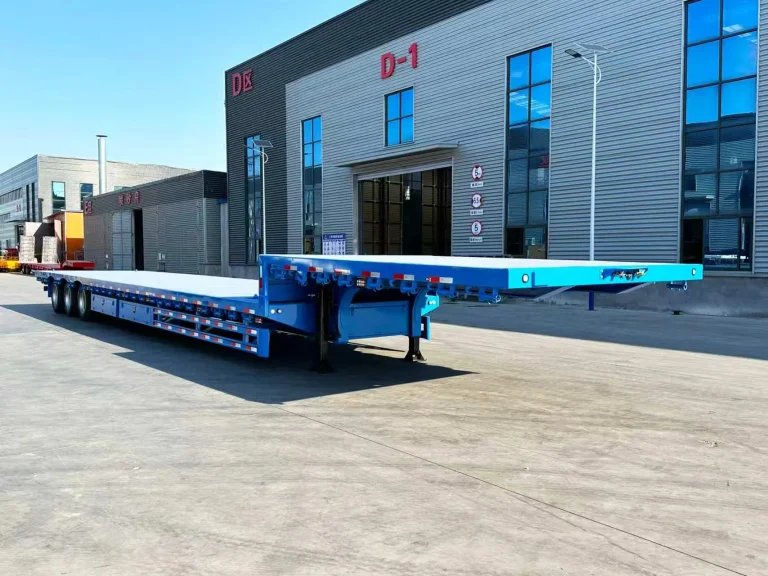
For a flatbed or similar open commercial trailer, the most useful answer is a range, not a single number. Some industry sellers describe a quality flatbed as lasting 15 to 20 years or more with strong upkeep, while broader open-trailer estimates often sit around 10 to 15 years for lighter-duty equipment and longer for heavier, better-built units. A lifecycle guide aimed at fleet users also shows a long-term stage at about 8 to 12 years, with mature equipment at 15+ years entering reconditioning and replacement planning.
That is why the average trailer lifespan is best treated as a business planning range. If you run a quality trailer on proper service intervals, protect it from serious corrosion, and avoid overload habits, that trailer could last far beyond the lower end of the range. If the unit is built with light materials, used hard, and neglected, the useful life can drop fast.
For fleet owners, importers, and project buyers, the real takeaway is simple: “average” matters less than the combination of materials and build, maintenance, and actual duty cycle.
Why do some trailers last much longer than others?
The biggest drivers are build quality, duty cycle, storage conditions, and maintenance discipline. Industry sources repeatedly point to load type, weather exposure, and upkeep as major factors in how long a trailer lasts. A commercial fleet source says a trailer can run around 500,000 to 750,000 miles in general, but that number changes sharply based on what it hauls, how it is serviced, and how hard it is worked.
In real life, a trailer used for light regional work is not aging the same way as a unit doing hauling heavy loads over rough routes every week. Rain, road salt, dust, poor loading habits, and rough terrain all add stress. So does being careless with securement, axle loading, and storage. Even a good quality frame wears faster when the work pattern is wrong.
That is also why experienced buyers do not compare equipment by price alone. A cheaper unit may look economical up front, but if it drives more downtime, more repair, and more early replacement, the total cost can be much worse.
How do trailer type and hauling needs change trailer lifespan?
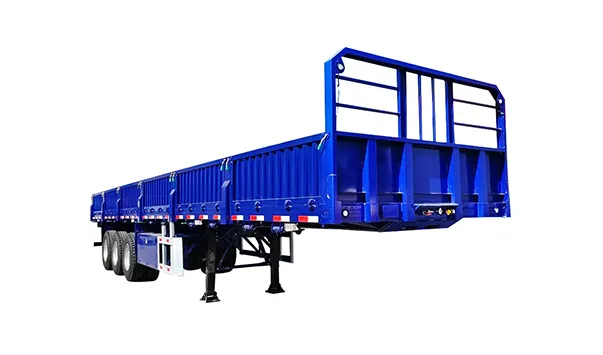
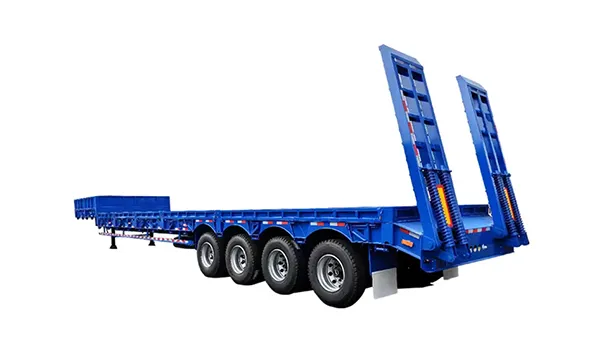
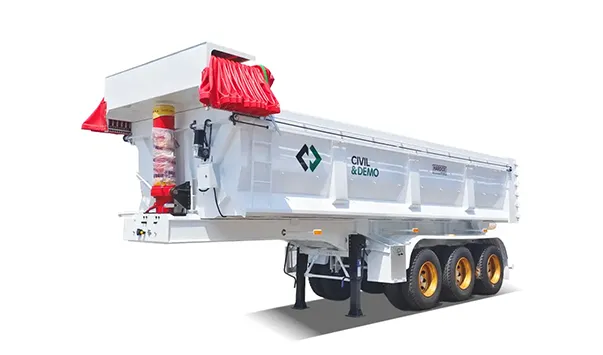
Not every trailer type ages at the same speed. A dump trailer sees different stress from an enclosed trailer, and utility trailers live very different lives from flatbeds, lowbeds, or tanker platforms. One dealer guide puts utility trailers around 10 to 15 years, a well-maintained dump trailer around 15 to 20 years, and an enclosed trailer at 20 years or more in many cases. The same source says flatbeds can also last 20 years or more with proper care.
The reason is simple. The type of trailer determines how the frame, deck, body, axle, and suspension are stressed. A flatbed handling steel, equipment, or oversized cargo faces deck wear, securement wear, and constant loading shock. A dump trailer adds stress from tipping cycles and the hydraulic system. An enclosed trailer may avoid some weather exposure but can still suffer floor, door, and moisture issues.
Your hauling needs should therefore guide both buying and maintenance. The right trailer is the one matched to the actual job, not just the initial budget. If your routes, loads, or use frequency have changed, the old unit may no longer be the right fit even if it is technically still usable.
Trailer Life by Type: A Practical Ballpark
| Tipo de remolque |
Typical ballpark from industry sources |
Main life drivers |
| Utility trailers |
10 to 15 years |
Load level, storage, frame care |
| Remolque volquete |
15–20 years |
Bed wear, tipping cycles, hydraulic care |
| Remolque cerrado |
20+ years |
Moisture control, floor and door condition |
| Flatbed / open heavy-duty trailer |
15–20+ years |
Deck wear, frame care, corrosion control |
These are planning ranges, not guarantees. Real service life depends on maintenance and use.

What parts usually wear out first on a working trailer?
In most commercial units, the first trouble spots are the critical components that move, flex, or take direct road shock. These include tires, wheels, brake parts, wiring, lights, securement gear, wheel ends, bearings, the suspension, and the landing gear/kingpin area. Great Dane’s flatbed guidance specifically calls out monthly checks on tires, lights, wiring, body damage, landing gear, kingpin, and cargo securement, and six-month checks on brake lining, wheel bearings, axle alignment, seals, couplers, torque arms, springs, and U-bolts.
That checklist tells you a lot about where wear really happens. The axle alignment can drift. The brake system ages. The electrical system starts acting up. Bearings can leak. Springs and torque parts take abuse. Over time, those small items become the difference between a productive asset and a trailer that keeps needing a fix.
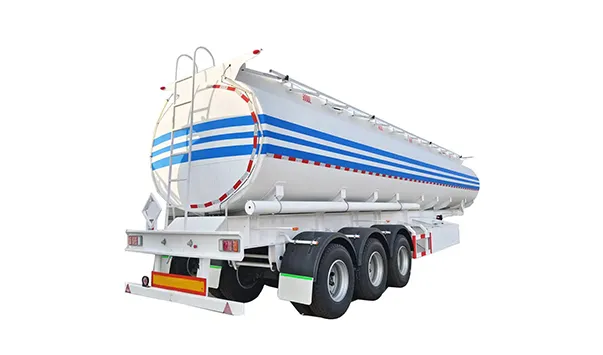
For specialty units, add category-specific risk points. A dump trailer needs closer attention to the bed, hoist, pivot areas, and hydraulic system. A tanker or cement unit adds more inspection needs around tank fittings and sealing points. Every category has its own wear pattern.
How do rust, corrosion, and structural damage shorten trailer life?
Few things kill lifespan of your trailer faster than neglected rust and corrosion. FMCSA guidance for frames and trailer inspections specifically points to problems such as cracked or missing cross members, frame cracks, corrosion fatigue, and defective body parts. The agency’s frame rule also says the frame or chassis must not be cracked, loose, sagging, or broken.
This matters because corrosion is not only cosmetic. Surface rust can often be managed, but excessive rust, hidden thinning, or a repeating crack in a structural area is a major warning sign. One trailer replacement guide lists frequent repairs, excessive rust, corrosion, and structural damage as clear signs that it may be time to stop patching and start planning for a new trailer.
Operators should also watch for paint lifting, weld-line deterioration, deck damage, and places where moisture gets trapped. If you see coating bubble, scaling metal, or rust returning quickly after repair, the frame may be telling you that the asset is moving into a late-life stage.
Why is regular maintenance the key to making a trailer last?
Because regular maintenance is key to controlling wear before it turns into downtime. FMCSA says carriers must systematically inspect, repair, and maintain commercial vehicles under their control, and that vehicles require a periodic inspection at least once every 12 months. That annual inspection is the legal floor, not the practical ceiling.
Manufacturers and fleet guides usually recommend a layered approach: pre-use walkarounds, monthly checks, and deeper periodic service. Great Dane says vulnerable flatbed components should follow one-month and six-month maintenance schedules. TEN’s lifecycle guide ties early use to inspections and minor adjustments, mid-life to tire and brake replacement, and long-term use to floor repairs, corrosion prevention, and bushing checks.
That is why smart operators keep a maintenance schedule instead of reacting only when something breaks. Trailer maintenance protects uptime, lowers emergency repair cost, and helps a trailer last closer to the high end of its possible life.
A Simple Preventive Maintenance Checklist
- Check tires, wheel condition, and pressure
- Check lights, wiring, and plugs
- Look at the hitch, kingpin, landing gear, and couplers
- Review brake condition and adjustment needs
- Inspect the suspension and axle alignment
- Look for leaks, loose bolts, or uneven wear
- Clean and protect areas exposed to salt, water, or cement dust
- Document every inspection and recurring problem
These actions are not glamorous, but they are what keep a commercial trailer profitable.
When should you repair a trailer, and when should you replace it?
The answer comes down to economics, safety, and fit for the current job. If a unit has occasional wear items and the frame remains sound, a targeted repair is usually the right move. But if the trailer is spending more time in the shop than on the road, the logic changes fast. Transwest flags frequent repairs, electrical failures, repeated brake or suspension issues, and recurring frame rust or crack repairs as red flags.
Pinnacle makes the same business point from another angle: older trailers near the upper mileage range can cut into profit through extensive repairs, higher downtime, and weaker hauling efficiency. If costs start approaching the value or utility of the asset, replacement becomes the smarter decision.
So ask three questions. Is the frame still sound? Are the repair costs stable or climbing? And does this trailer still fit our current routes and loads? If the answer to two of those is “no,” replacement is usually the better fleet decision.
How do older trailers affect uptime, cost, and fleet profit?
Aging does not automatically mean bad, but it does mean more management attention. A lifecycle guide for fleets describes “mature equipment” at 15+ years as the point where operators should evaluate major refurbishment versus replacement. That is because older units often need corrosion remediation and high-wear components that need to be replaced.
From a profit view, the danger is not only the invoice total. It is lost utilization. A trailer that misses loads, delays a project, or cannot safely haul today’s cargo profile is costing money even when it is not visibly broken. Pinnacle notes that older, worn units may reduce load efficiency and may not support the business the way a more capable new trailer can.
That is why many fleet managers now treat life span planning as an operating discipline, not just a purchasing decision. They want a trailer still on the road because it is productive, not merely because it still exists.
What should buyers check before choosing a new trailer?
Start with the work. The best buying question is not “What trailers for sale are cheapest?” It is “What trailer best fits our current and next-stage routes, axle loads, and hauling needs?” If the business has grown, deck length, payload, suspension spec, or frame strength may need to grow too.
Then check the physical platform: frame design, chassis strength, deck structure, suspension layout, brake package, corrosion protection, and service access. Ask whether the builder uses quality materials, how the unit is coated or protected, and whether wear items are easy to source. These choices affect not only purchase price, but also how long the trailer stays useful in real service.
Finally, think about where and how you will store it, who will maintain it, and whether the supplier has a good service and parts network. The purchase is only day one. The real value shows up over the next decade.

Why do quality materials and build quality matter so much?
Because build quality determines how much abuse the unit can take before problems begin stacking up. A heavy-duty frame, better coatings, stronger deck integration, and better welding standards help the trailer survive heavy use and repeated loading cycles. Sources aimed at buyers repeatedly tie long service life to manufacturing quality and upkeep rather than age alone.
This is especially important for global importers and contractors buying from overseas. Two trailers may look similar in photos, but the one built with stronger material control, better corrosion protection, and more thoughtful engineering will usually give a far better return over time. In short, lower end trailers may win on invoice price, but better-built units usually win on lifetime value.
As a fabricante de semirremolques, we see this clearly. Buyers who focus on good care, service access, and reputable build standards usually keep equipment productive longer. Buyers who ignore those points often come back asking why one unit aged so much faster than expected.
Preguntas frecuentes
What’s the average lifespan of a flatbed trailer?
As a practical industry ballpark, a quality flatbed trailer often lasts around 15 to 20 years or more if it receives proper maintenance, while wider ranges for commercial trailers often fall somewhere between 10 to 15 years and 10 to 20 years depending on type and use.
How long can a trailer last with regular maintenance?
Quite a lot longer than a neglected unit. Lifecycle and manufacturer guidance consistently show that preventive maintenance, scheduled inspections, brake and bearing service, and corrosion control are what push a trailer toward the upper end of its usable life.
What shortens trailer lifespan the fastest?
The big killers are overload habits, poor maintenance, recurring corrosion, frame damage, neglected brakes or suspension, and ongoing electrical or wheel-end problems. Persistent rust and structural issues are especially serious.
When should I replace instead of repair a trailer?
When the repair cycle becomes constant, costs keep climbing, uptime keeps dropping, or the unit no longer fits current work. If the trailer spends more time being fixed than hauling revenue loads, replacement often makes better business sense.
Do dump trailers and enclosed trailers last as long as flatbeds?
Not exactly. Industry guides often place a well-maintained dump trailer around 15–20 years and an enclosed trailer around 20+ years, but the real answer depends on duty cycle, weather, and maintenance quality.
Is annual inspection enough for commercial trailers?
No. FMCSA requires at least annual periodic inspection, but practical fleet care goes much further. Monthly checks, periodic brake and suspension review, and corrosion monitoring are essential if you want the trailer to stay safe and productive.
Aspectos clave que hay que recordar
A flatbed trailer often has an average working life in the 15–20+ year range when it is well built and well maintained.
There is no single universal number; trailer lifespan depends on use, environment, materials, and maintenance.
Regular maintenance is key if you want a trailer to stay productive and safe.
Watch the frame, chassis, brakes, suspension, bearings, wiring, and corrosion points closely.
Excessive rust, repeated structural fixes, and constant downtime are strong replacement signals.
The cheapest unit is not always the most economical over the full life span. Better materials and build quality usually pay back over time.
The best fleet decision is to match the right trailer to the real job, then keep it on a disciplined service plan.



 06 May 2026