Elegir el remolque incorrecto puede ralentizar la carga, desperdiciar capacidad de carga útil y hacer que todo el transporte resulte más complicado de lo necesario. Esto se vuelve costoso rápidamente. La solución práctica consiste en conocer primero las principales opciones de tipos de remolques y, a continuación, adaptar el camión y la carga a la plataforma adecuada.
Cuando se habla de las tres categorías principales de remolques de carga de plataforma abierta en la industria del transporte por carretera, por lo general se refieren al remolque de plataforma plana, al de plataforma escalonada y al de plataforma baja. Un remolque de plataforma plana no tiene techo ni paredes; uno de plataforma escalonada cuenta con dos niveles de plataforma para carga más alta; y un remolque de plataforma baja se encuentra más cerca del suelo para equipo muy alto o pesado. Existen muchas otras opciones de remolques, pero estas tres son el punto de partida más común en el transporte de carga pesada con plataforma abierta.

Resumen
1. ¿Cuáles son los tres tipos principales de remolques?
2. ¿Qué es un remolque de plataforma y qué transporta?
3. ¿Qué es un remolque con plataforma escalonada y en qué se diferencia?
4. ¿Qué es un remolque de plataforma baja y cuándo se debe usar uno?
5. ¿Existen otros tipos de remolques además de estos tres?
6. ¿Cómo elegir el remolque adecuado para tu carga?
7. ¿Son importantes el número de ejes, el tipo de enganche y el tamaño del remolque?
8. ¿Qué tipo de remolque es el más adecuado para la construcción, la logística y el transporte de equipo?
9. ¿Por qué es tan importante la selección de remolques en la industria del transporte por carretera?
¿Cuáles son los tres tipos principales de remolques?
Cuando la gente pregunta: “¿Cuáles son los tres tipos de remolques?”, la respuesta depende del contexto. En el remolque personal, es posible que escuches hablar de remolques utilitarios, remolques cerrados y remolques de cuello de cisne. En el transporte comercial de carga por carretera, las tres categorías más comunes de remolques de plataforma abierta suelen ser los de plataforma plana, los de plataforma escalonada y los de plataforma baja. FreightWaves los clasifica como grupos de equipo separados y explica que cada uno maneja una altura y un perfil de carga diferentes.
Esa distinción es importante porque un remolque nunca es simplemente una plataforma sobre ruedas. Cada tipo de remolque está diseñado para resolver un problema de transporte diferente. Un remolque de plataforma es abierto y versátil. Un remolque de plataforma escalonada permite transportar carga más alta sin sobrepasar los límites legales de altura. Un remolque de plataforma baja está diseñado con una altura aún menor para maquinaria de gran tamaño o pesada.
Así que la respuesta breve es sencilla. Si te refieres a equipos de transporte de carga por carretera para uso pesado, los tres tipos principales son el remolque de plataforma plana, el remolque de plataforma escalonada y remolque de plataforma baja. Si te refieres al mercado de remolques en general, hay muchos tipos diferentes de remolques, entre ellos los de carga, los volquetes, los para ganado y los de uso general. La guía comparativa de CURT muestra cuántas categorías diferentes de remolques existen, tanto para uso comercial como personal.
¿Qué es un remolque de plataforma y qué transporta?
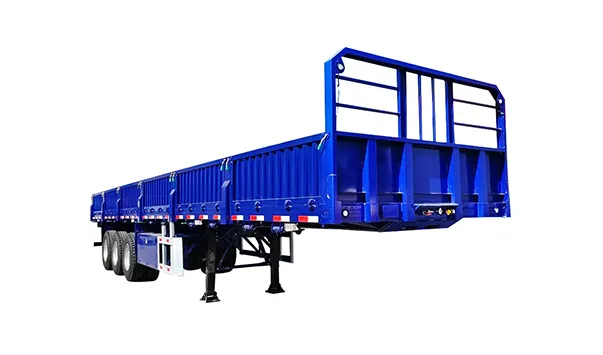
Un remolque de plataforma es una de las plataformas de carga más reconocidas del mercado. FreightWaves lo define como un remolque que carece de techo o paredes, y es precisamente por eso que resulta tan versátil. Dado que la plataforma es abierta, los operadores pueden cargar desde la parte trasera, desde un costado o incluso desde arriba con grúas y otros equipos de elevación.
Ese diseño abierto hace que el remolque de plataforma sea ideal para carga grande, de formas irregulares o difícil de acomodar en un remolque cerrado o de caja seca. FreightWaves menciona ejemplos como equipo de construcción, vigas de acero y objetos demasiado grandes para caber dentro de una carrocería cerrada. En otras palabras, un remolque de plataforma suele ser la mejor opción cuando la carga es difícil de manejar, más que frágil.
La contrapartida es la exposición. Un remolque de plataforma ofrece un excelente acceso, pero es posible que la carga requiera una lona, correas, cadenas y una sujeción cuidadosa durante el transporte. Por eso, el trabajo con remolques de plataforma suele exigir más mano de obra durante la carga y la descarga. En muchas flotas, el remolque de plataforma sigue siendo el tipo de remolque más versátil y común, pero no siempre es el más fácil de manejar.
¿Qué es un remolque con plataforma escalonada y en qué se diferencia?
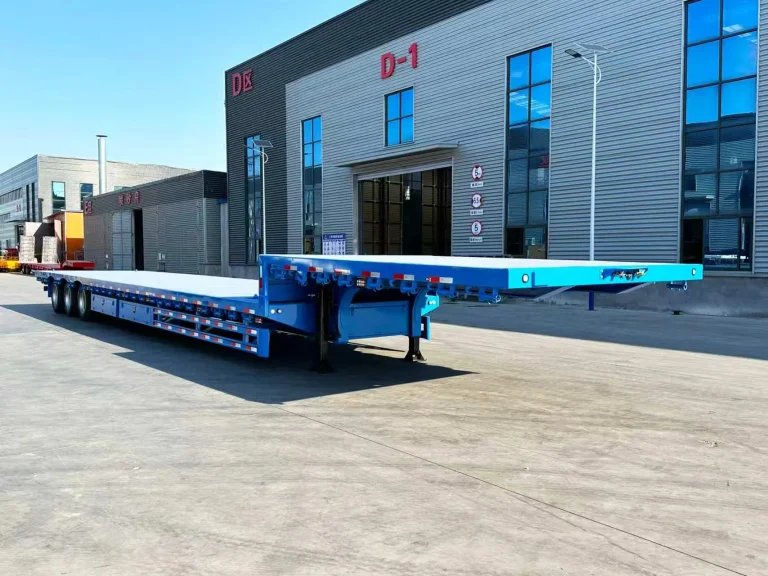
Un remolque de dos niveles también se conoce como remolque de plataforma rebajada o remolque de un solo nivel rebajado. FreightWaves explica que estos remolques cuentan con dos niveles, una sección superior y una inferior, lo que les permite transportar carga que los remolques de plataforma estándar no pueden manejar debido a restricciones de altura.
Esa plataforma inferior es la clave. Un remolque de plataforma escalonada mantiene gran parte de la carga más cerca del suelo, lo que permite transportar legalmente una máquina más alta o una carga empaquetada sin requerir la misma configuración extrema que un remolque de plataforma baja. FreightWaves señala que la plataforma inferior es más larga y más baja que la plataforma superior cerca del tractor, lo que la hace útil para artículos como bobinas, tuberías, turbinas y maquinaria que son demasiado altos para una plataforma plana estándar.
Por lo tanto, si un remolque de plataforma plana es demasiado alto, pero un remolque de plataforma baja es más de lo que necesitas, un remolque de plataforma escalonada se convierte en la solución intermedia. Es una de las opciones de remolque más prácticas en el transporte de carga moderno, ya que ofrece más espacio en altura y, al mismo tiempo, es más sencillo que muchos remolques especializados.
¿Qué es un remolque de plataforma baja y cuándo se debe usar uno?
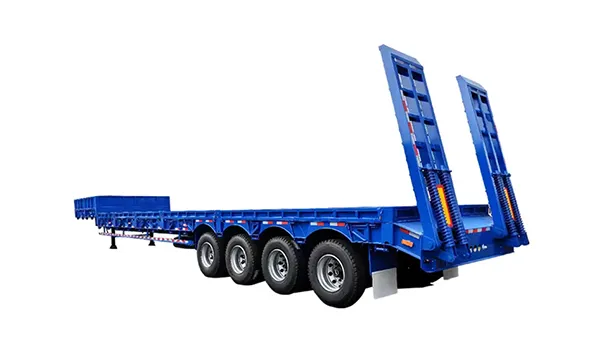
Un remolque de plataforma baja está diseñado para equipos más altos, más pesados y más difíciles de transportar. FreightWaves describe el remolque de plataforma baja o de doble caída como un remolque con tres secciones de plataforma: una plataforma alta al frente, un compartimento central bajo y otra sección elevada cerca de las ruedas. Debido a que la mayor parte de la longitud del remolque se encuentra más cerca del suelo que en un remolque de plataforma escalonada, puede transportar equipo más alto.
Por eso, un remolque de plataforma baja está estrechamente relacionado con el transporte de equipo pesado. FreightWaves menciona las retroexcavadoras, las topadoras y las excavadoras como carga típica para un remolque de plataforma baja. Cuando la carga es demasiado alta para un remolque de plataforma plana y demasiado exigente para un remolque de plataforma escalonada, el hueco central más bajo del remolque de plataforma baja hace posible el traslado.
Algunos compradores también comparan los remolques de plataforma baja con los remolques de doble caída o las unidades de cuello de cisne desmontables. En la práctica, estas categorías se superponen en el transporte de cargas pesadas. FreightWaves señala que los equipos de cuello de cisne desmontables se utilizan a menudo para cargas que deben subirse al remolque y que estas unidades suelen ser de plataforma baja. Para trabajos de gran envergadura con cargas sobredimensionadas, es aquí donde el remolque se convierte en una verdadera herramienta de transporte pesado, en lugar de ser simplemente una plataforma de carga.

¿Existen otros tipos de remolques además de estos tres?
Por supuesto. Existen muchos tipos diferentes de remolques más allá de las tres principales categorías de remolques de plataforma abierta. La guía de remolques de CURT presenta una extensa lista que incluye modelos de quinta rueda, remolques de carga, remolques para botes, remolques para transportar autos y más. Esa lista por sí sola demuestra que el término «remolque» abarca muchos productos diferentes, no solo un estilo de unidad de carga.
Un remolque utilitario es un ejemplo común. U-Haul define un remolque utilitario como un remolque abierto de plataforma plana que se utiliza para transportar carga, equipo o artículos voluminosos que no caben dentro del vehículo remolcador. Por lo general, tiene paredes laterales bajas o ninguna en absoluto, y carece de techo. Eso lo hace útil para trabajos comerciales ligeros, jardinería, traslado de suministros y remolque de camionetas pequeñas o SUV.
Otro ejemplo es el remolque de cuello de cisne. Silver Moon Trailers explica que un remolque de cuello de cisne se acopla en la caja de una camioneta pickup sobre el eje trasero, lo que mejora la estabilidad y la distribución del peso. Esta configuración es muy utilizada para el transporte de equipo, ganado y automóviles. Así que, si bien los remolques de plataforma plana, de dos niveles y de plataforma baja son las tres principales opciones para el transporte de carga, existen muchas familias diferentes de remolques en el mercado en general.
¿Cómo elegir el remolque adecuado para tu carga?
La elección del remolque adecuado empieza por la carga. Hazte tres preguntas sencillas: ¿qué tan alta es?, ¿cuánto pesa? y ¿cómo la vas a cargar? Si se trata de una carga ancha con plataforma abierta y la altura no es un problema, un remolque de plataforma plana suele ser la mejor opción. Si la carga es más alta, un remolque de plataforma escalonada podría ser más adecuado. Si se trata de maquinaria muy alta o pesada, un remolque de plataforma baja u otra configuración especializada suele ser la opción más segura.
También debes pensar en la protección. Algunas cargas deben transportarse en una plataforma abierta. Otras deben ir en un remolque cerrado o en una camioneta de carga seca. FreightWaves señala que los remolques Conestoga incorporan un armazón de lona móvil a los equipos de plataforma abierta, lo que permite un acceso más fácil que el de una camioneta de carga seca, al tiempo que protege la carga durante el transporte. Esto resulta útil cuando la carga necesita protección contra las inclemencias del clima, pero al mismo tiempo se beneficia del acceso lateral o superior.
En el transporte B2B, el remolque perfecto no es aquel que tiene la lista más larga de características. Es aquel que se adapta a tu carga, ruta, método de carga y presupuesto operativo. Por eso, las flotas con experiencia no se limitan a preguntar: “¿Cuál es el remolque más barato?”. Se preguntan: “¿Qué tipo de remolque hará que este transporte sea más seguro, más rápido y más rentable?”.”
¿Son importantes el número de ejes, el tipo de enganche y el tamaño del remolque?
Sí, sin duda. Un remolque no se define únicamente por su plataforma. También depende del número de ejes, el tipo de enganche y su tamaño total. Un mayor número de ejes permite soportar más peso y mejora la distribución de la carga. Tanto U-Haul como Big Tex demuestran que los remolques de un solo eje y los de ejes tándem o dobles difieren significativamente en cuanto a capacidad de carga y manejo.
El tipo de enganche también es importante. Un remolque de cuello de cisne coloca el acoplador sobre el eje trasero del vehículo remolcador, lo que mejora la estabilidad y el equilibrio del peso. Esa es una de las razones por las que los diseños de cuello de cisne son tan populares para transportar equipo, autos y realizar tareas de remolque más pesadas con una camioneta. Por el contrario, los diseños de enganche en el parachoques son más sencillos para muchas aplicaciones más ligeras, pero por lo general no ofrecen la misma estabilidad para el transporte de cargas pesadas.
El tamaño también es igual de importante. FreightWaves señala las dimensiones típicas de las categorías de remolques de plataforma plana, de plataforma escalonada y de plataforma baja, y esas dimensiones afectan directamente lo que cada remolque puede transportar. Por eso, cuando un comprador compara remolques para camiones, La verdadera comparación no se reduce solo a si es abierta o cerrada. Se trata de la altura y la longitud de la plataforma, la configuración de los ejes, el diseño del enganche y los requisitos legales de transporte.
¿Qué tipo de remolque es el más adecuado para la construcción, la logística y el transporte de equipos?
Para materiales de construcción y carga de gran tamaño en general, el remolque de plataforma suele ser la opción más común, ya que es de fácil acceso y se adapta fácilmente. FreightWaves señala que los remolques de plataforma se utilizan para equipo de construcción, acero y otros artículos de gran tamaño que no caben dentro de una caja cerrada.
Para maquinaria de mayor altura y carga industrial, el remolque de plataforma escalonada resulta más atractivo, ya que la plataforma inferior ofrece mayor altura libre. Esto lo convierte en una opción práctica para muchos trabajos de transporte de equipo y carga industrial en los que una plataforma plana queda demasiado alta, pero no es necesario un remolque de plataforma baja completa.
Para bulldozers, excavadoras y trabajos de transporte de carga pesada de verdad, el remolque de plataforma baja suele ser la mejor opción. FreightWaves vincula directamente los remolques de plataforma baja con esa categoría de maquinaria de construcción de gran altura. Así que, si te dedicas al transporte de carga logística, materiales de construcción y equipo pesado, el “mejor remolque” varía según el trabajo en cuestión. No existe un solo tipo de remolque que sirva para todas las tareas de transporte.

¿Por qué es tan importante la elección del remolque en la industria del transporte de carga?
Porque el remolque lo cambia todo. Influye en cómo se carga, cómo se asegura la carga, qué rutas se pueden utilizar, con qué rapidez se puede dar la vuelta al equipo y qué tipo de carga se puede aceptar. En la industria del transporte por carretera, un remolque inadecuado puede convertir un traslado sencillo en un problema de permisos, un riesgo de daños o un problema laboral.
También afecta la flexibilidad del negocio. Una flota que cuente con un solo tipo de remolque podría perder trabajos rentables. Una flota que conozca muchos tipos diferentes de remolques de carga puede adaptar el equipo con mayor precisión a las necesidades de los clientes. Es por eso que los compradores suelen comparar semirremolques, unidades de carga, modelos de plataforma abierta y remolques especializados antes de tomar una decisión final sobre las especificaciones. La amplia comparación de remolques de CURT y el desglose de equipos de carga de FreightWaves muestran cuán amplio es realmente el mercado.
Desde el punto de vista de la fabricación, esta es precisamente la razón por la que las especificaciones de los semirremolques son importantes. Un remolque no es solo acero y ejes. Es una herramienta de trabajo. Cuanto más preciso sea el diseño del remolque para la tarea en cuestión, más eficiente será su funcionamiento a largo plazo.
Preguntas frecuentes
¿Cuáles son los tres tipos principales de remolques?
En el transporte de carga pesada con plataforma abierta, las tres categorías principales suelen ser: plataforma plana, plataforma escalonada y plataforma baja. Estas se distinguen por la altura de la plataforma y el tipo de carga para la que están diseñadas.
¿Cuál es la diferencia entre un camión de plataforma plana y uno de plataforma escalonada?
Un camión de plataforma tiene una sola plataforma principal y carece de paredes o techo. Un camión de plataforma escalonada cuenta con dos niveles de plataforma, lo que le permite transportar carga más alta que excedería los límites de altura de un camión de plataforma estándar.
¿Para qué se utiliza un remolque de plataforma baja?
Un remolque de plataforma baja se usa para cargas muy altas o maquinaria pesada, como las topadoras, las excavadoras y otra maquinaria que requiere una altura de plataforma inferior a la que puede ofrecer una plataforma escalonada.
¿Un remolque utilitario es lo mismo que un remolque de plataforma?
No exactamente. Un remolque utilitario suele ser un remolque abierto más ligero, diseñado para ser remolcado por vehículos particulares o comerciales ligeros, mientras que un remolque de plataforma en el transporte de carga es, por lo general, una plataforma abierta de mayor resistencia destinada al transporte comercial.
¿Qué es un remolque de cuello de cisne?
Un remolque de cuello de cisne es un remolque que se acopla a la caja de un vehículo tractor por encima del eje trasero, lo que mejora la estabilidad y la distribución del peso. Se utiliza con frecuencia para transportar equipo, ganado y vehículos.
¿Hay muchos tipos diferentes de remolques además de estos tres?
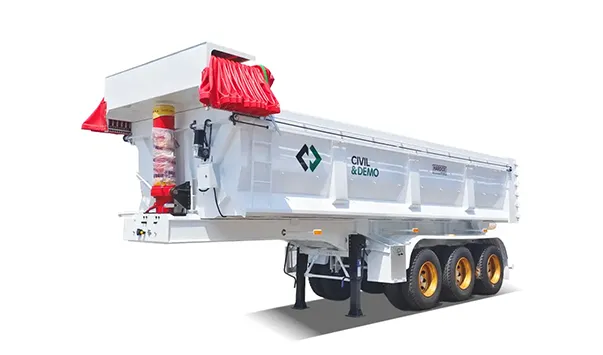
Sí. Hay muchos diferentes tipos de remolques, incluyendo remolques de carga, remolques multiuso, remolques para transporte de autos, remolques para embarcaciones, remolques para ganado, diseños de remolques volquetes y otros equipos de transporte especializados.
Reflexiones finales: Cómo elegir el tipo de remolque adecuado para cada trabajo
Entonces, ¿cuáles son los tres tipos de remolques? En el transporte de carga de plataforma abierta, la respuesta más clara es: el remolque de plataforma plana, el remolque de plataforma escalonada y el remolque de plataforma baja. Esas tres categorías abarcan una gran parte del mercado del transporte pesado e industrial, ya que resuelven tres problemas distintos relacionados con el espacio libre y la carga.
Pero la lección más importante es esta: la elección del remolque siempre debe depender de la carga. Un remolque que funciona a la perfección para un tipo de carga puede no ser la opción adecuada para otro. Por eso, los compradores de los sectores de logística, construcción y transporte de proyectos deben ir más allá de los simples nombres y enfocarse en para qué está diseñado el remolque.
Como fabricantes de semirremolques con sede en China, vemos una y otra vez que se cumple la misma regla: las especificaciones adecuadas permiten un mejor transporte, una mejor carga y un mayor valor a largo plazo. El semirremolque en sí es solo el principio. La verdadera ventaja radica en adaptar el tipo de semirremolque al trabajo real.
Conclusiones clave
En el transporte de carga pesada con plataforma abierta, las tres categorías principales de remolques suelen ser los de plataforma plana, los de plataforma escalonada y los de plataforma baja.
Un remolque de plataforma no tiene techo ni paredes y es ideal para carga de gran tamaño o de formas irregulares.
Una plataforma escalonada tiene dos niveles y resulta útil para cargas más altas que, de otra manera, sobrepasarían la altura máxima permitida en una plataforma plana estándar.
Un remolque de plataforma baja se encuentra más cerca del suelo y se utiliza comúnmente para transportar maquinaria pesada y equipos muy altos.
También hay muchos otros tipos de remolques, como los remolques utilitarios, de carga, de cuello de cisne y los diseñados para transportes especializados.
El remolque más adecuado depende de la carga, el método de carga, la altura, el peso y las condiciones de transporte.



 17 de abril de 2026