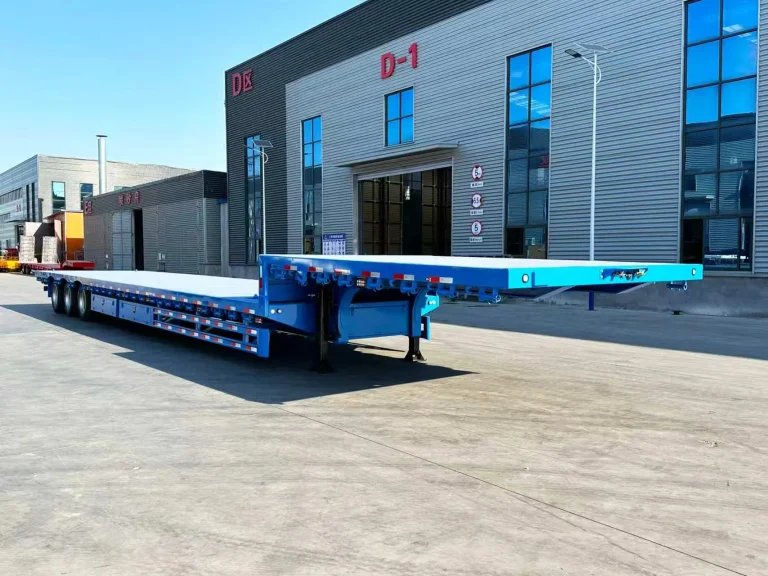
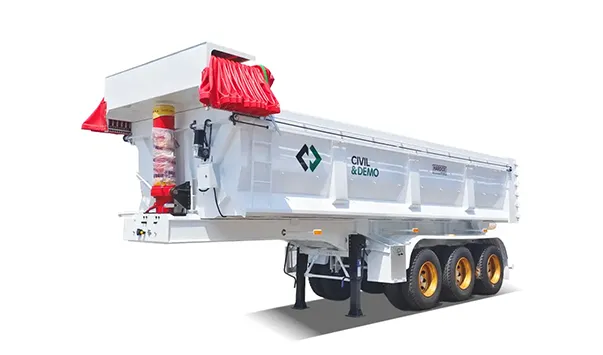
Un remolque de descarga trasera utiliza un sistema de elevación hidráulico para levantar la parte delantera de la caja de descarga, de modo que el material salga por la parte trasera. Para trabajos pesados de construcción, minería, áridos e infraestructura, los compradores deben comparar la carga útil, el volumen de la caja, la disposición de los ejes, el espesor del acero, el cilindro hidráulico, la suspensión, el sistema de frenos y los límites viales locales antes de elegir un remolque.
¿Qué es un remolque volquete y cómo funciona un remolque volquete trasero?
A remolque volquete es un remolque diseñado para transportar material a granel suelto y descargarlo inclinando la caja de carga. En lugar de que los trabajadores retiren el material a mano, un sistema hidráulico eleva la caja y permite que la gravedad expulse la carga.
Un remolque de descarga trasera se inclina hacia atrás. La parte delantera de la caja se eleva, mientras que la parte trasera permanece cerca del chasis. A continuación, la arena, el carbón, la grava, el mineral, la piedra, la tierra y los materiales de demolición se desplazan hacia la compuerta trasera y se descargan.
La secuencia básica de trabajo es sencilla:
- Carga la caja volquete.
- Transporta la carga hasta el lugar de la obra.
- Estaciona en un terreno adecuado y estable.
- Abre o libera la puerta trasera según sea necesario.
- Activa el sistema de elevación hidráulico.
- Levanta el cuerpo poco a poco.
- Deja que se descargue el material.
- Baja el cuerpo antes de volver a moverte.
Eso suena fácil. Pero la ingeniería que hay detrás no lo es.
Una carga pesada se desplaza a medida que la carrocería se eleva. Esto modifica el centro de gravedad del remolque. El chasis, la disposición de los ejes, la suspensión, el sistema hidráulico, la forma de la carrocería y las condiciones del terreno influyen en la estabilidad.
Por eso, como fabricantes de semirremolques, no consideramos que un semirremolque volquete sea simplemente una caja de acero con un cilindro. Partimos de la carga, las condiciones de la carretera, la carga útil prevista, el equipo de carga y el entorno de descarga.

Remolque de descarga trasera vs. camión de carga vs. camión de descarga lateral: ¿cuál es la diferencia?
Un camión volquete lleva su caja de descarga directamente sobre el chasis del camión. La cabina, el motor, el chasis y la caja de carga funcionan como un solo vehículo.
Un semirremolque de descarga funciona de manera diferente. El tractor proporciona la fuerza de tracción, mientras que el remolque transporta el material a granel. Esto facilita que una flota separe el tractor del remolque y utilice tractores con diferentes equipos.
| Tipo de equipo |
Cómo se descarga |
Fuerza típica |
Uso típico |
| Remolque de descarga trasera |
Volcado hacia atrás |
Gran capacidad de carga y trayectoria de descarga sencilla |
Arena, grava, mineral, materiales de construcción |
| Volquete lateral |
Dejemos eso a un lado |
Descarga lateral rápida |
Minería, obras viales, agregados |
| Camión volquete |
Volcado hacia atrás o hacia un lado |
Alta maniobrabilidad |
Obras de construcción y trabajos en obra de corta distancia |
| Remolque utilitario |
Por lo general, un sistema manual o un sistema hidráulico pequeño |
Flexibilidad para trabajos ligeros |
Jardinería y trabajos menores |
Un remolque de descarga lateral puede descargar material sin necesidad de elevar la caja tanto como algunos modelos de descarga trasera, pero requiere suficiente espacio libre a los lados. Un remolque de descarga trasera necesita espacio libre por encima y una superficie de descarga estable.
El diseño adecuado depende del lugar donde funcione el equipo.
En el caso de una mina grande, un camión volquete de descarga trasera de alta resistencia puede ser una opción práctica, ya que puede transportar una gran carga útil a largas distancias. En una obra urbana con poco espacio, un camión volquete puede ser más fácil de maniobrar. Un remolque utilitario pequeño pertenece a una clase de servicio completamente diferente.
¿Qué hace que un remolque volquete de alta resistencia sea duradero?
De alta resistencia remolque volquete Debe soportar más que el peso estático. Se enfrenta a impactos repetidos por carga, vibraciones de la carretera, fuerzas de torsión, abrasión causada por la carga y tensión durante la descarga.
La estructura principal suele ser la que más atención merece.
Viga principal y chasis
El chasis soporta las fuerzas procedentes del tractor, los ejes, la suspensión, la caja basculante y el sistema hidráulico. Las configuraciones de los camiones volquetes de CHENLU que cotizan en bolsa utilizan vigas principales de acero reforzado, y algunas configuraciones actuales especifican acero estructural Q345. Las especificaciones del producto varían según el modelo y el proyecto, por lo que el material definitivo siempre debe confirmarse en el plano aprobado.
Espesor del piso y de las paredes laterales
Las diferentes cargas desgastan el acero a ritmos distintos.
La arena fina no es lo mismo que la roca triturada. El carbón no es lo mismo que el mineral de hierro. Un remolque que funciona bien con un tipo de carga puede desgastarse demasiado rápido con otro.
Las páginas actuales de productos de los remolques volquetes de CHENLU muestran configuraciones seleccionadas con un piso de 8 mm y paredes laterales de 6 mm, mientras que otros modelos específicos para proyectos utilizan acero más grueso. Estas cifras no son especificaciones universales para todos los remolques volquetes.
Para materiales abrasivos, podemos recomendar una placa más gruesa o acero resistente al desgaste.
Soldadura y refuerzo
Un buen acero no sirve de mucho si la calidad de la soldadura es deficiente.
Entre las áreas críticas se incluyen:
- Puntos de montaje del cilindro hidráulico
- Uniones de vigas principales
- Travesaños
- Soportes del eje y de la suspensión
- Área de pivote del cuerpo
- Portón trasero
- Rieles para la parte superior e inferior del cuerpo
El proceso de fabricación de CHENLU abarca la preparación de materiales, la soldadura de vigas, el ensamblaje del chasis, el tratamiento de superficies, la pintura, el ensamblaje final y la inspección. La empresa también señala que, durante la producción, se revisan los ejes, la suspensión, los frenos, los sistemas eléctricos y las áreas clave de soldadura.
Ese proceso es importante porque un remolque volquete tiene una vida muy dura. Los pequeños problemas de fabricación rara vez se quedan en eso.

¿Cómo afectan la disposición de los ejes, la carga útil y la capacidad cúbica a un remolque volquete?
La información actual sobre los productos de CHENLU incluye una selección de de tres ejes configuraciones en el rango de 40 a 60 toneladas y configuraciones de cuatro ejes diseñadas para aplicaciones más pesadas. En la página actual del proyecto del camión volquete CHENLU de cuatro ejes también se describe una configuración de 35 m³ para materiales de construcción. Estos son ejemplos específicos de cada modelo, no límites universales.
Por qué es importante el número de ejes
Los ejes distribuyen la carga sobre la carretera.
La configuración de tres ejes es común en el transporte de carga a granel pesada. Los diseños de cuatro ejes pueden adaptarse a distintos requisitos de distribución de carga, pero el hecho de agregar otro eje no significa automáticamente que un remolque pueda transportar legalmente más peso.
Las normas de tránsito siguen siendo importantes.
Por ejemplo, en el sistema de autopistas interestatales de EE. UU., la FHWA establece los siguientes estándares máximos federales:
- 20 000 lb para un solo eje
- 34 000 lb para un eje tándem
- Peso bruto del vehículo de 80,000 lb, sujeto a la Fórmula Federal de Puentes
Las normas fuera de la red de autopistas interestatales pueden variar según el estado.

Remolque volquete sin chasis vs. remolque volquete con chasis y descarga trasera: ¿cuál es mejor?
Un remolque volquete sin chasis utiliza la propia caja de descarga como elemento estructural principal, en lugar de depender de un chasis convencional completo debajo de la caja.
El diseño puede reducir el peso en vacío en algunas aplicaciones, lo que podría aumentar la carga útil. Un volquete de descarga trasera de aluminio o de aluminio sin estructura puede ser una opción atractiva cuando es importante contar con un peso en tara bajo.
Un convencional remolque de descarga trasera tipo bastidor utiliza un chasis específico debajo de la carrocería. Este diseño es común en los exigentes sectores de la construcción y la minería, ya que la estructura puede reforzarse para soportar caminos accidentados y cargas de alto impacto.
Ninguno de los dos enfoques es automáticamente mejor.
Un comprador que esté comparando un remolque volquete sin estructura, un remolque volquete de acero o uno de aluminio debería evaluar lo siguiente:
| Factor |
Por qué es importante |
| Peso de la tara |
Afecta la carga útil |
| Abrasión de la carga |
Influye en la elección del material del cuerpo |
| Calidad de las carreteras |
Las carreteras en mal estado aumentan la tensión estructural |
| Frecuencia de descarga |
Un mayor número de ciclos aumenta la fatiga |
| Red de reparaciones |
Afecta el tiempo de inactividad |
| Corrosión |
Importante para ciertos climas y ciertos tipos de carga |
| Costo de compra |
Se debe sopesar con la vida útil |
Otro diseño que los compradores pueden encontrar es el de la carrocería semicircular. Su interior curvo puede facilitar el flujo del material y reducir las esquinas donde este se pueda acumular. Otras empresas prefieren carrocerías rectangulares o en forma de U.
Una vez más, no hay un ganador indiscutible.
Actualmente, CHENLU se especializa en configuraciones de camiones volquetes y basculantes reforzados para trabajos pesados, destinados al transporte en los sectores de la construcción, la minería, la arena, el carbón, la grava, la piedra y los minerales.
¿Cómo se elige un fabricante de remolques volquetes para carga pesada?
Al comprar directamente de fábrica, el fabricante debería ayudarte a resolver tus dudas técnicas antes de que comience la producción.
Como fabricante profesional de semirremolques en China, nos especializamos en soluciones OEM y ODM para flotas, empresas mineras, contratistas de construcción, distribuidores y compradores de proyectos internacionales.
Nuestro proceso comienza con unas cuantas preguntas básicas:
¿Qué estás transportando?
La arena y el carbón no desgastan la caja de un camión de volquete de la misma manera que la roca y el mineral.
¿Cuánto necesitas transportar?
La carga útil influye en mucho más que el tamaño de la carrocería. Afecta a los ejes, las llantas, la suspensión, la resistencia del chasis y el diseño hidráulico.
¿Dónde funcionará el tráiler?
El transporte por carretera, las minas, las obras de construcción, los caminos del desierto y las rutas de montaña generan diferentes cargas.
¿Cómo vas a descargar?
Necesitas suficiente espacio libre en altura, estabilidad del terreno y espacio libre para el vuelco.
Actualmente, CHENLU ofrece soluciones de camiones volquetes de tres y cuatro ejes, con la posibilidad de personalización en cuanto a la estructura de la carrocería, el espesor del acero, la suspensión, la configuración de los ejes, los sistemas hidráulicos, los colores, la imagen de marca y los requisitos del proyecto. El proceso integral de servicios de la empresa abarca la confirmación del diseño, la producción, la inspección, la tramitación de los documentos de embarque y el servicio posventa.
Preguntas frecuentes
¿Cuál es la diferencia entre un remolque de descarga trasera y un camión volquete?
Un remolque volquete trasero no tiene motor y debe acoplarse a un tractor. Un camión volquete integra el motor, la cabina, el chasis y la caja volquete en un solo vehículo. Un remolque suele ofrecer mayor flexibilidad para las operaciones de flotas en carretera, mientras que un camión volquete puede resultar útil en rutas más cortas o con menos espacio.
¿Cuántas toneladas puede transportar un remolque de descarga trasera?
No existe un número universal. Las páginas actuales de CHENLU muestran configuraciones seleccionadas de tres ejes en un rango aproximado de 40 a 60 toneladas, así como configuraciones más pesadas de cuatro ejes para requisitos de carga útil más elevados. La carga útil permitida sigue dependiendo del peso en vacío del remolque, el peso del tractor, la distancia entre ejes, las normas viales y la densidad de la carga.
¿Qué es mejor, un remolque volquete de tres ejes o uno de cuatro ejes?
Ninguna de las dos opciones es siempre la mejor. Tres ejes pueden ofrecer un equilibrio práctico entre capacidad, costo, peso y maniobrabilidad. Cuatro ejes pueden ayudar a distribuir cargas más pesadas. Las normas locales sobre ejes y peso bruto deben determinar la configuración final.
¿Qué espesor de acero debo elegir?
Depende de la carga. La arena y el carbón suelen causar un impacto y una abrasión menos severos que la piedra, el mineral o los escombros de demolición. CHENLU puede ajustar el grosor del piso y de las paredes laterales de acuerdo con el material y el ciclo de trabajo.
¿Puedo agregar una lona enrollable a mi remolque de descarga?
Sí, los sistemas de lona se pueden personalizar según el diseño de la carrocería y los requisitos operativos. Se pueden considerar opciones de cubierta manual, de lona enrollable y eléctrica. Verifica las normas locales sobre la cobertura de la carga antes de elegir el sistema.
¿Debería comprar un remolque de descarga trasera nuevo o usado?
El equipo usado puede reducir la inversión inicial, pero revisa con cuidado el chasis principal, la carrocería, las soldaduras, los puntos de pivote, el cilindro hidráulico, la suspensión, los ejes, los frenos, las llantas y la corrosión. El equipo nuevo de fabricante original (OEM) puede diseñarse desde el principio de acuerdo con tu carga útil, tu carga, tu ruta y las normas vigentes.



 27 de agosto de 2026