Elegir un camión cisterna inadecuado para el transporte de líquidos puede provocar contaminación, ralentizar las operaciones, suponer un riesgo para la seguridad y generar costosos retrasos. La situación se agrava cuando la carga es inflamable, criogénica, corrosiva o de gran volumen. La solución más acertada consiste en adaptar el tanque y el vehículo al producto, la ruta y las normas de seguridad.
Various types of tanker used for liquid bulk include oil tankers, product tankers, chemical tanker vessels, lng carriers, lpg carriers, fuel tanker units, and other specialized ships designed to transport large quantities of liquid in bulk. Each carrier is built around the properties of the cargo, the required loading and unloading method, and the applicable safety standards.

Resumen
1. What Is a Tanker and Why Is It the Main Carrier for Liquid Bulk?
2. What Are the Main Different Types of Tanker Used for Bulk Liquids?
3. How Do Oil Tankers, Crude Carriers, and Product Tankers Differ?
4. What Is a Chemical Tanker and What Liquid Cargo Does It Carry?
5. How Do LNG Carriers and LPG Carriers Transport Natural Gas?
6. What Are the Main Types of Liquid Bulk Cargo in Global Transport?
7. How Do Tank Size, Tank Material, and Cargo Properties Affect Tanker Design?
8. Why Do Environmental and Safety Standards Matter So Much for Tankers?
9. How Should Buyers Choose the Right Tanker or Tank Trailer for Liquid Products?
10. What Trends Are Shaping Modern Tankers and Bulk Liquid Transport?
What Is a Tanker and Why Is It the Main Carrier for Liquid Bulk?
A tanker is a ship or roadgoing carrier built to transport liquid cargo or gas in bulk rather than in packaged containers. Britannica defines a tanker as a ship designed to transport or store liquids or gases in bulk, while IMO rules define an oil tanker as a ship constructed or adapted primarily to carry oil in bulk in its cargo spaces. That is why the word tanker is the most accurate term for the transportation of liquid bulk by sea.
In everyday business language, some people loosely say bulk carriers when they mean all bulk ships. But in shipping, bulk carriers usually refer to dry bulk ships, while liquid bulk ships are more precisely known as tankers or liquid bulk carriers. That distinction matters because a tank system for oil, chemicals, or gas is designed around very different risks than a dry cargo hold.
From our side as a China-based semi trailer manufacturer, we see the same principle on land. Whether the carrier is a sea-going vessel or a road tank trailer, the design starts with one question: what cargo must it carry, and how must it carry it safely?
What Are the Main Different Types of Tanker Used for Bulk Liquids?
The main different types of tanker for liquid bulk are crude oil tankers, product tankers, chemical tanker vessels, lng carriers, lpg carriers, and smaller specialized units such as a fuel tanker or water tank vehicle in land transport. IMO’s chemical and gas codes make this division clear by setting different construction and equipment rules for chemicals and liquefied gases, while oil tanker definitions sit under MARPOL and SOLAS frameworks.
The simplest way to understand the market is to group tankers by what they carry. Some carry crude oil from extraction points to refineries. Some carry refined petroleum products like diesel, gasoline, or jet fuel. Some carry industrial or edible liquids. Others carry cryogenic or pressurized gas. So although all are known as tankers, the cargo they carry changes the whole design.
Here is a quick classification table:
| Tanker type |
Main cargo |
Core design priority |
| Crude oil tanker |
Petróleo crudo |
Very large volume and efficient ocean transport |
| Product tanker |
Refined petroleum products |
Cleaner segregation and flexible discharge |
| Buque cisterna para productos químicos |
Industrial chemicals, edible chemicals, specialty liquids |
Material compatibility and contamination control |
| LNG carrier |
Liquefied natural gas |
Cryogenic containment and insulation |
| LPG carrier |
Liquefied petroleum gas and related gases |
Pressure or refrigerated containment |
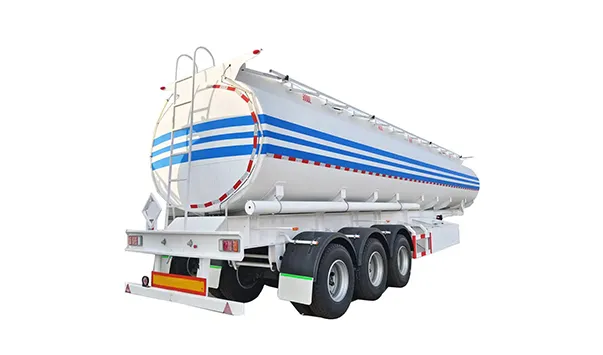
| Fuel tanker / road tank |
Fuel and other liquid products by road |
Flexible distribution and route service |
How Do Oil Tankers, Crude Carriers, and Product Tankers Differ?
Oil tankers are the broad family used for oil in bulk, but within that family there are important subgroups. Crude carriers are mainly used for transporting crude oil from production zones to a refinery, while product tankers are built for refined fuels and cleaner liquid products such as diesel, gasoline, and jet fuel. EIA explains that tanker classes are used for both crude oil and petroleum products, and notes that LR-class ships can carry both refined products and crude oil.
Size classification also matters. EIA states that VLCCs carry around 1.9 million to 2.2 million barrels of crude oil and are typically used on long-haul routes, while Suezmax tankers carry around 1 million barrels and are the largest vessels that can transit the Suez Canal. It also describes Aframax tankers as vessels between 80,000 and 120,000 deadweight tons. These classes help buyers understand scale, route fit, and port access.
For practical buying, this means large crude carriers are chosen for huge ocean volumes, while product tankers are more flexible for cleaner fuel distribution. So when someone asks about large crude, vlccs, or panamax tankers, they are really asking about route economics, draft limits, and market purpose as much as ship size.
What Is a Chemical Tanker and What Liquid Cargo Does It Carry?
A chemical tanker is a specialized carrier designed to transport dangerous chemicals and noxious liquid substances in bulk. IMO states that the IBC Code provides an international standard for the safe carriage in bulk by sea of dangerous chemicals and noxious liquid substances, and that the Code prescribes ship design, construction, and equipment according to the nature of the products involved.
This matters because chemical tanker design must control contamination, material attack, and hazard exposure. Some cargoes are corrosive. Some react with ordinary steel. Some need coated tanks, while others are carried in stainless steel tanks. U.S. Coast Guard chemical tank vessel guidance also shows that cargo lists and certificates control what types of chemicals a given ship can legally carry.
In plain terms, chemical tankers carry industrial chemicals, solvents, acids, edible oils, and other specialty liquid products. They are more cargo-sensitive than ordinary oil tankers, and the tank cleaning standard is often stricter because even minor residue can create cargo contamination in the next load.
How Do LNG Carriers and LPG Carriers Transport Natural Gas?
LNG carriers and LPG carriers are gas tankers, but they are not the same. IMO says the IGC Code provides the international standard for the safe carriage by sea in bulk of liquefied gases, and it sets the design and construction rules for ships carrying these products. That means gas carriers transport cargoes that demand special containment, insulation, pressure control, and emergency systems.
LNG carriers are designed to transport liquefied natural gas at cryogenic temperature. Britannica notes that LNG is moved by special tankers outfitted with supercooled cryogenic tanks, and that these ships keep gas in liquid state so it can be shipped efficiently over long distances. Newer LNG vessel designs include membrane and spherical systems depending on containment strategy.
LPG carriers, by contrast, transport liquefied petroleum gas and related cargoes such as petroleum gas mixtures. These ships may use pressurized, semi-refrigerated, or fully refrigerated arrangements depending on cargo and voyage length. Industry gas-tanker guidance from ICS identifies gas carrier safety as a distinct operational field with its own recognized best practice.
What Are the Main Types of Liquid Bulk Cargo in Global Transport?
The main types of liquid bulk cargo include crude oil, refined fuels, chemicals, edible oils, liquefied gases, and utility liquids such as water. On the oil side, common cargoes include crude, diesel, gasoline, jet fuel, and other refined petroleum products. On the gas side, the main categories are lng and lpg. On the chemical side, the range can include acids, solvents, alcohols, and other industrial chemicals.
It is also important to note that some tankers also carry edible products like vegetable oil or palm oil, but only when the tank design, cleaning method, and regulatory condition support that service. This is another reason why the properties of the cargo determine the ship type. A ship built for clean edible cargo cannot be managed the same way as one used for aggressive chemical service.
For buyers and fleet planners, the real lesson is simple: do not think only in terms of “a tanker.” Think in terms of types of liquid bulk carriers matched to product behavior, contamination tolerance, temperature need, and terminal setup.

How Do Tank Size, Tank Material, and Cargo Properties Affect Tanker Design?
The properties of the cargo drive the engineering. If the product is flammable, the tank arrangement and venting need to reflect that risk. If it is cryogenic, insulation becomes critical. If it is corrosive, the tank material may need to be made of stainless steel or another compatible system. If the cargo is sensitive to mixing, tank segregation and washability become major priorities.
Size classification also affects purpose. VLCCs, Suezmax tankers, and Aframax tankers exist because route size, port access, and economics vary. EIA’s tanker-size notes show that large crude classes are selected partly by canal limits and trade routes, not only by raw capacity. In short, tank size is about geography and market structure as much as engineering.
This same design logic applies to land-based cargo tank solutions. In our road tanker business, we make the same calculations around material compatibility, discharge method, volume, and safe and efficient transport. Sea tankers are larger, but the engineering mindset is very similar.
Why Do Environmental and Safety Standards Matter So Much for Tankers?
Because one failure can damage people, product, ship, port, and environment at the same time. IMO’s IBC Code and IGC Code both exist to reduce risk to the ship, crew, and environment by prescribing design and equipment standards based on cargo danger. Those standards are stringent because the consequences of a bad match or poor operation can be severe.
For oil cargoes, MARPOL and related tanker regulation define what an oil tanker is and how it fits into broader ship safety and pollution control rules. For chemicals, the IBC Code links the cargo list to ship type and environmental hazard rating. This is a good reminder that environmental and safety controls are not extra features. They are the core of modern tanker design.
Today’s modern tankers also rely on operational discipline as much as steel. ICS describes its liquefied gas tanker guide as definitive best-practice support for gas carrier operators, which shows how important procedures, training, and automated safety protocols have become alongside hardware.
How Should Buyers Choose the Right Tanker or Tank Trailer for Liquid Products?
Start with the cargo itself. Is it crude, refined fuel, gas, food-grade liquid, or chemical? Then ask what the product needs: temperature control, pressurization, segregation, sanitary handling, or corrosion resistance. This is the fastest path to the right carrier choice.
A simple buyer checklist helps:
| Buying question |
Por qué es importante |
| What liquid cargo will you carry? |
Defines the base tanker class |
| Is the cargo flammable, cryogenic, or corrosive? |
Changes tank material and safety system |
| How much volume is needed? |
Influences ship class or road tanker size |
| Is contamination tolerance low? |
Drives cleaning and segregation requirements |
| What terminal system is used for carga y descarga? |
Affects pump, pressure, or manifold setup |
| What standards apply? |
Determines compliance path and certification |
For global B2B buyers, I also recommend separating sea tanker knowledge from road tanker needs, but learning from both. A fuel tanker trailer, a chemical road tank, and an ocean-going carrier all follow the same core rule: the container must match the product and the operating environment.
What Trends Are Shaping Modern Tankers and Bulk Liquid Transport?
One major trend is smarter specialization. Instead of one generic tanker, buyers increasingly want vessels and road tankers tailored to a narrower set of liquid products. That improves efficiency, lowers contamination risk, and helps meet more stringent customer and regulatory expectations.
Another trend is scale and route optimization. EIA’s market data continues to show the importance of vlccs, Suezmax, and Aframax classes in oil trade because route economics still shape tanker demand. At the same time, gas shipping remains tied to LNG infrastructure growth, which keeps lng carriers strategically important.
For manufacturers like us, the takeaway is clear. Whether the customer is buying a sea-going carrier or a road tank semi trailer, they want safe design, stable operating cost, and long-term compatibility with the cargo they carry. That is what keeps the tanker business moving forward.

FAQs About Tankers for Carrying Bulk Liquids
What are the main different types of tanker for bulk liquids?
The main types are crude oil tankers, product tankers, chemical tanker vessels, lng carriers, lpg carriers, and smaller fuel or utility tankers. Each one is built around a different liquid bulk service and different safety needs.
What is the difference between crude carriers and product tankers?
Crude carriers mainly move crude oil from production areas to a refinery, while product tankers move refined fuels such as diesel, gasoline, and jet fuel.
Why do chemical tankers often use stainless steel tanks?
Because some chemical cargoes are corrosive or highly sensitive to contamination. A chemical tanker may need stainless steel tanks or other compatible tank systems depending on the cargo list and certificate of fitness.
How do LNG carriers differ from LPG carriers?
LNG carriers transport liquefied natural gas at very low cryogenic temperature, while LPG carriers transport liquefied petroleum gas and similar gases under pressure, refrigeration, or both depending on the design.
What are VLCCs, Suezmax tankers, and Aframax tankers?
They are tanker size classes used mainly in oil shipping. EIA says VLCCs carry around 1.9 to 2.2 million barrels of crude oil, Suezmax tankers around 1 million barrels, and Aframax tankers generally fall in the 80,000 to 120,000 deadweight-ton range.
Why are safety standards so important for tankers?
Because tankers carry high-risk bulk cargoes that can create pollution, fire, toxic exposure, or cargo loss if the tank and operating procedures are wrong. That is why IMO uses the IBC Code, IGC Code, and tanker safety rules for safe carriage by sea.
Final Thoughts: Choosing the Right Carrier for Safe and Efficient Transport
A tanker is not just a tank with a hull. It is a specialized carrier built around the real behavior of the liquid it carries. Oil, gas, chemicals, edible products, and utility liquids all demand different containment, handling, and safety solutions.
That is why the best decision always begins with the cargo. Once you know the product, the right tanker type becomes much easier to define. The same thinking applies in sea shipping and in road tanker trailer engineering: correct cargo matching is the base of safe and efficient transport.
As a China-based semi trailer manufacturer, we apply this same logic to road tank trailers for fuel, chemicals, bulk powders, and other specialized liquid work. The product decides the tank. The route decides the structure. The safety standard decides the details.
Conclusiones clave
Various types of tanker for liquid bulk include crude oil tankers, product tankers, chemical tanker vessels, lng carriers, and lpg carriers.
Crude carriers move crude oil, while product tankers move refined petroleum products such as diesel, gasoline, and jet fuel.
A chemical tanker must match cargo compatibility and often uses stainless steel or other specialized tank systems.
LNG and LPG carriers are gas tankers, but they use different containment methods based on the gas and temperature/pressure conditions.
VLCCs, Suezmax tankers, and Aframax tankers are major oil tanker classes shaped by route and port constraints.
IMO safety codes are central to tanker design because bulk liquid cargoes create serious operational and environmental risk.
The right carrier is always chosen based on the properties of the cargo, discharge method, route, and compliance needs.



 15 de mayo de 2026